Spirit Conjuration
Spirit conjuration is the modern practice of calling spirits and working with them: not the grimoire tradition's preserved texts but the living communities whose work descends from them, the spirit workers and conjure workers whose practice is relationship built over offerings and petitions rather than a single dramatic rite. The practice's generic shape, as its own guides teach it, is the relationship's arc: the practitioner learns a spirit's history, raises its altar, introduces themselves, keeps the offerings consistent, and only then petitions, the relationship's maintenance including its correction, the offerings withheld and the image reversed when the spirit fails, and its severance when the work ends.
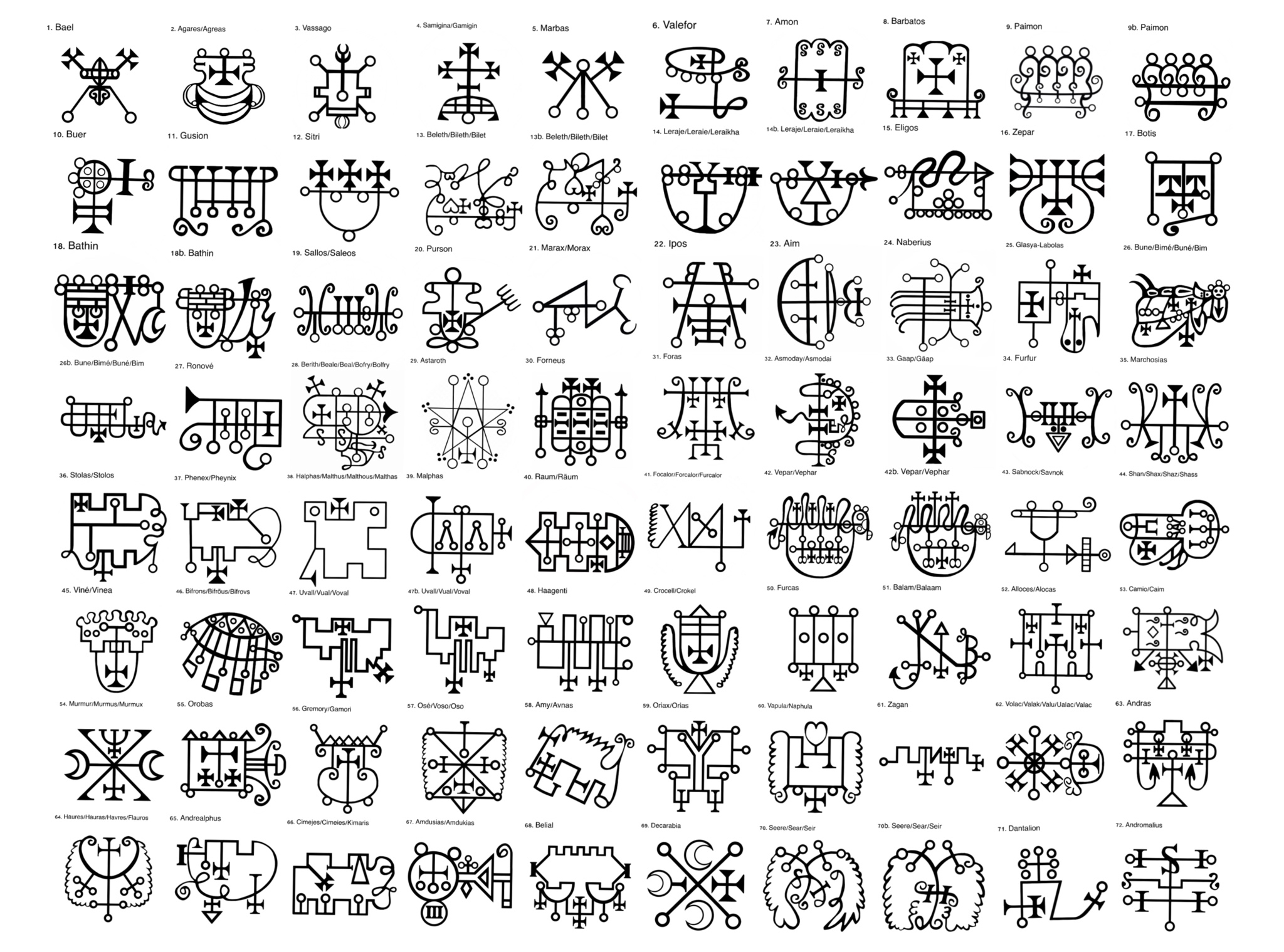
The tradition with the most developed modern literature is demonolatry: the worship of demons as teachers and guides, adopting the name in the century's second half and going public at its end. Its core doctrine inverts the grimoire's: the demonolater does not conjure against a demon's will, the circle balances energy rather than protecting against attack, and the practice's founder-chronicler, the author whose fifty-odd books supply the tradition's canon, teaches respect as the operative mode, supplication rather than command. The tradition's hierarchy of spirits, assembled in the nineteen-sixties by an occultist whose family notebooks were never published, carries the practice's structure, and the community's own account of its origins is candid about what is reconstruction and what is received: the sigils from magicians' work, the biographies from the founder's daughter, the validity measured by how well the system works. The goetic revival holds the command tradition's opposite pole, its scholars and practitioners debating what the old texts require: the traditional constraint of circle and thwarting angels, the chthonic reading of the demons as old gods under Christian names and the relationship-first practice that follows, the psychological reading, and the forum debates over compulsion and obsession that mark a living community's argument with itself.
The conjure tradition's spirit work is the American folk practice's spine: the rootworker as spirit-led, the dead and the ancestors worked alongside the deities and the familiar spirits, the graveyard dirt collected with rite and permission, the practice's norms being relationship, offering, and reciprocity. Its open-versus-closed debates, the ancestral-religion framing and the access questions, are part of the practice's living record, and the entry marks them where they belong: the technique taught openly, the tradition claimed as inheritance.
The communities publish their ethics, and the entry carries them as the practice's own standards: the license to depart performed even when nothing appeared, the frivolous conjuring avoided, the protection established before early contact, the consent-first canon of the spirit-keeping movement, the harm-none extended to spirits in the communities that hold it. The market spans the tradition's range: the demonolatry school's patreon classes and intensives, the manifestation-marketing empire's courses and initiations, the traditional command school's books, the free courses of the seal sellers, and the rootworker directories that vet their practitioners. Access is open throughout, the texts public and the communities self-gathered, with the folk tradition's inheritance questions the one boundary the market does not sell past.
For the seeker, the practice's counsel is the communities' own: spirits are worked with, not commanded, the relationship built before the request, and the operator who begins with offerings rather than demands is practicing every tradition this entry covers at once.
At a glance
- Category
- Ritual & Ceremonial Magic
- Origin of practice
- Contemporary; the communities self-formed online from the 1990s onward
- Access
- OpenOpen to all , no initiation required. What access means
Traditions
The living lineages this practice moves within.
Tools & Materials
The spirit worker's tools are the altar and its maintenance: the offering schedule, the candles and incense keyed to the spirit worked with, the images and vessels that house the relationship, and the divination that reads its responses. The traditions supply their specific instruments: the demonolatry hierarchy's sigils and the enns vibrated as callings, the goetic seals and their triangles, the rootworker's graveyard dirt and the conjure formulas. The communities' texts are the practice's manuals, from the demonolatry canon's fifty volumes to the goetic revival's scholarly editions, and the courses teach the work at prices from free to the intensives' hundreds. The spirit-keeping movement's tools are the vessels and bindings of its companionship practice, its consent-first canon published. What the practice requires beyond the altar is time: the relationship's arc is the technique, and the practitioner's discipline is the offerings kept and the respect maintained before any petition is made.
Elements & Concepts
The altar. The spirit's dedicated place, raised and maintained: the relationship's ground, and the practice's first structure.
The offering. The reciprocal gift that feeds the relationship: the practice's currency, given before any request, and the tradition's defining habit.
The petition. The request made within the established relationship: the work's point, and the practice's restraint, the demand avoided.
The consent principle. The communities' shared ethic, from the demonolater's no-conjuring-against-will to the spirit keeper's mutual agreement: the modern tradition's line against the coercive reading, and the debate the command school still contests.