Sacred Site Pilgrimage
Sacred site pilgrimage is the practice of journeying to places held sacred: the walk to the shrine, the circuit of the powerful sites, and the modern tourist economy that has grown around both. The practice's history is the world's oldest travel: the Greek periegete whose description of Greece functioned as the pilgrim's guidebook, the mysteries at Eleusis drawing the pan-Hellenic crowds, and the medieval church's three great centers whose shrine business the economic historians documented as a franchise operation, the indulgences at a fixed papal scale, the offerings split by thirds, the miracle one-upmanship between the competing shrines, and the surrogate pilgrims hired to walk in another's place.
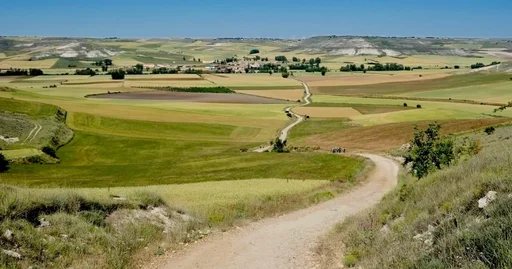
The modern revival's drivers are documented: the novelist's 1987 account of his own walk and the comedian's later bestseller both credited with spurring the Camino's surges, the pilgrimage's record years now running near half a million compostelas annually, roughly a third of walkers motivated by Catholic faith and a similar share by the spiritual, the rest cultural. The sites' layered histories define the practice's texture: Glastonbury's abbey and tor and chalice well, the Christian pilgrimage and the New Age layer arriving through the well's 1913 purchase and the trust's preservation in perpetuity as a place of pilgrimage with its many paths one source, the ley-line idea descending from the antiquarian's trackways reworked by the occultists, and the sacred-place theory that anchored the town as a new Jerusalem; Machu Picchu's capped capacity under a dynamic regime; and Sedona, whose vortexes have a documented and recent origin: the Florida psychic visiting the red rocks in 1979, the entity she encountered in 1980 describing the energy spots she named vortexes, her workshops and tours beginning the industry, the tourism bureau itself crediting her while dating the popularity spike to the 1987 global meditation event, the caveats the entry carries being that no historic or Indigenous precedent exists, all four sites sit within a mile of a road, and no agency has ever measured or certified a vortex.
The practice's formats are the tour and the walk: the jeep vortex tours and the guided meditations and the chakra-reading walks at the four named sites whose exact vortex points are word-of-mouth lore, the forest service permitting and policing the guides' claims, the crystals and cairns left behind counting as litter under the rules, and the Camino's passport stamps and albergues and pilgrim masses. The scholarship reads the pilgrim and the tourist as a continuum rather than a dichotomy, the communitas framing inherited from the anthropologists, the comparative studies of Glastonbury and Sedona's spiritual economies, and the community responses, the Camino locals' noise and crowding and trespass, Sedona's housing and traffic squeeze, and the appropriation critique that names the Yavapai and Apache as the landscape's Indigenous peoples while the New Age marketing claims Native spirituality.
Access is the practice's variable: open by default, the Sedona trails and the Camino routes and the Tor free, ticketed at the well and the abbey, and gated where the communities decide: the Stonehenge interior by paid small-group access with free managed open access at solstice under statute, and Uluru's climb permanently closed in 2019 at the traditional owners' request, the cleanest example of a host community revoking access. The entry's counsel is the record's: the pilgrim's route is the host community's gift, and the difference between pilgrimage and tourism, the scholars agree, is a continuum walked one step at a time by the visitor's own conduct.
At a glance
- Category
- Sacred Space & Place
- Origin of practice
- Pilgrimage ancient worldwide; the modern circuit built from the 1980s
- Access
- Context-dependentOpenness depends on the specific tradition and context. What access means
Traditions
The living lineages this practice moves within.
Tools & Materials
The pilgrim's tools are the credential and the route: the Camino passport stamped at each stage, the albergue's bunk, the guidebook's stages. The tour economy supplies its own kit: the jeep and the spiritual guide, the meditation cushions at the vortex sites, the Red Rock pass for the trailheads. The site practices are the etiquette: the crystals left behind counted as litter, the group sizes capped, the solstice's managed access observed. The tradition's texts are the guidebooks across two millennia: the Greek periegete, the medieval route guides, the modern walking guides, and the scholars' studies of the pilgrimage economies. What the practice requires beyond the tools is the host's terms: the community's permissions, the closures honored, and the continuum's discipline, the pilgrim's conduct the difference the scholars measure.
Elements & Concepts
The shrine. The destination held sacred by a tradition: the practice's anchor, layered in the sites where many traditions meet.
The credential. The stamped passport of the walking pilgrimage: the Camino's compostela requirement, and the modern practice's proof of the walk.
The vortex. Sedona's claimed energy centers, named by a psychic in 1980: the practice's invented sacred site, its origin documented and its measurement absent.
The closure. The host community's revocation of access: Uluru's climb closed at the owners' request. The practice's boundary, set from within the sacred rather than without.
Go deeper
Immerse yourself
Learn it and visit it: courses that teach sacred site pilgrimage, and the places held sacred to it.
The organizations
Institutions & businesses
Organizations whose work centers on sacred site pilgrimage.