Pranic Healing
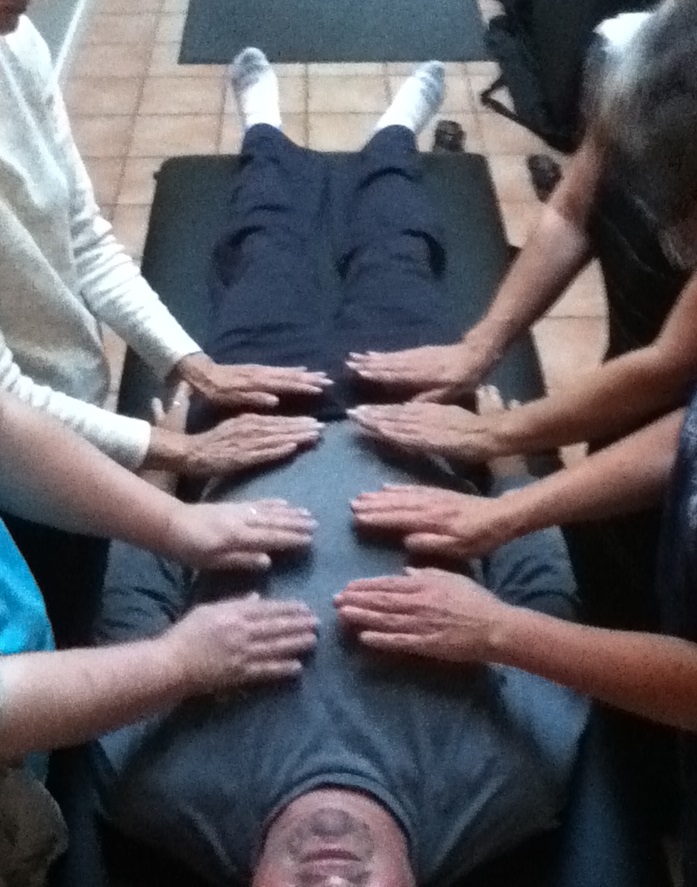
Pranic healing treats the energy body methodically. Its founder, a Filipino-Chinese chemical engineer who spent years synthesizing the energy traditions he had studied, built the system on two principles he stated plainly: the body heals itself, and prana, the life force, accelerates that healing when applied. Everything in the practice follows from those two premises and from a three-step procedure that gives the work its structure: the energy body is scanned, swept clean, and energized, the hands doing all of it a short distance from the skin, the practice understood as no-touch throughout.
The scan reads the aura and its centers with the sensitive palms, feeling for density and congestion; the sweep draws away what the scan finds, the accumulated energy the system calls diseased, removed in strokes down the body and away; and the energizing projects fresh prana into what has been cleared, drawn from the sun, the air, and the ground. The session follows a published sixteen-step procedure from rapport to release, the practitioner rescan after each intervention, the work ending with the stabilizing of what was given and the formal cutting of the energetic link, the practice's own version of the cord. Its instructions extend to the aftercare: the treated area is not washed for hours, the system holding that water draws off what was placed there.
The system's sophistication lives in its protocols. The energy anatomy it uses is elaborate, major and minor centers throughout the body, and the advanced practice assigns colors to prana itself, each color carrying its own action: red to strengthen, green to decongest and disinfect, blue to soothe and inhibit, violet for what the system calls the higher frequencies. The advanced manuals prescribe condition by condition, which centers to sweep and which pranas to project, a specificity that distinguishes the practice from the intuitive styles of the field; the healer's work here is learned as procedure rather than felt as gift. That procedural character is the system's lineage as much as its style: its founder studied Chinese chi kung alongside yoga and the esoteric schools, and the system presents itself as a modern synthesis, organized and testable, of what those traditions held.
The organization carries the work on the scale its founder built: institutes and foundations across the world, the graded courses from the first workshop through the advanced color system to the meditation practice that anchors the community's weekly life, and the instructor path with its teaching quotas and service hours, the tradition organized with more structure than most of its neighbors. The practice's own statements draw the medical boundary clearly: the work complements treatment and does not replace it, and the foundations' clinics run beside, not against, the hospitals of their cities.
The research record belongs to the organization's own authors: small trials in depression and wound healing, reported positive, conducted by the foundation's researchers, and awaiting the independent replication that would settle them. The honest entry holds the practice's claims, its procedural seriousness, and the state of its evidence in one view, and lets the seeker weigh them, which is what the system's founder, an engineer by training who framed his work as a science, would have asked of it.
At a glance
- Category
- Energy & Spiritual Healing
- Origin of practice
- Philippines, 1987; systematized from chi kung and yoga traditions
- Access
- OpenOpen to all , no initiation required. What access means
Traditions
The living lineages this practice moves within.
Tools & Materials
Pranic healing works with the hands and the protocols, and its kit reflects the procedural character: the scanning palms trained to feel the energy body's density, the sweeping strokes taught in their numbered sequence, and the visualization system that colors the prana projected. The tradition adds crystalline tools at its advanced levels, stones cleansed and programmed as the founder's books instruct, and the salt-water bowl of the practice's own cleansing hygiene, the sweep's collected energy disposed into it. The reference shelf is the founder's own series, from the first manual through the advanced protocols to the psychotherapy volume, read in order as the system teaches, and the practice's workshops supply the rest: two-day intensives where the scanning and sweeping are practiced under supervision until the hands learn their work. The community's weekly meditation, the Twin Hearts practice the founder gave, is the tradition's sustaining ritual, taught at the first level and kept for life.
Elements & Concepts
The scan. The practice's opening diagnostic: palms reading the aura and centers for congestion and depletion. The skill every session begins with, and the foundation's courses test it.
The sweep. The cleansing stroke: accumulated energy drawn down and away, general and then localized. The system's hygiene, performed before anything is given.
Energizing. The projection of fresh prana into cleared areas, by color at the advanced levels: red to strengthen, green to cleanse, blue to soothe. The system's therapeutic act, protocol-driven.
The release. The session's formal close: the energetic link cut, the practitioner detaching from the work. The practice's own cord-cutting, built into every protocol.
The organizations
Institutions & businesses
Organizations whose work centers on pranic healing.