Petition & Container Work
Petition and container work is the folk magic of paper and vessel: the written petition that is itself the spell, and the container that seals it with a conditioning material, the honey jar's sweetening and the sour jar's souring and the freezer's binding. The petition's taxonomy is the rootwork tradition's own: the name paper bearing the target's name and often their birth date, the petition paper carrying the request or the command or the affirmation, the prayer paper carrying scripture, and the deployments running from the paper under the fixed candle to the paper in the shoe worn to the job interview, the burned ashes and the dissolved ink and the sealed packet each a way the written intent travels.
The written-charm lineage is ancient: the tradition's own teaching traces the written spell to the earliest preserved writing, the Mesopotamian bowls buried under thresholds, the Greek papyri, the lead tablets, the seals of the Solomonic literature, the written amulets of the Indian and Himalayan traditions, the Pennsylvania Dutch letters, the Chinese charms and the joss paper, and the hoodoo documentation beginning with the introduction of written English to the Black diaspora, likely earlier through the literate enslaved, the folklorist's nineteen-thirties recordings of the supplications of the New Orleans lineage, the attributed book whose authorship the scholarship corrects, and the fieldworker's corpus whose volumes remain the practice's deepest source.
The honey jar's history is the practice's best-documented arc: the sweetening work old and diverse, its oldest forms having no jar at all, the candle on a saucer ringed with poured honey or syrup, the cored apple or hollowed onion holding the sweetener and the name paper hidden in a coffee can, the sugar box with the candle stuck in, and the jars becoming dominant only in the mid-twentieth century as packaged sweeteners reached every grocery, the whole family's forms now lumped under the honey jar's name. The jar's construction is prescribed: the squat glass with the metal lid, filled to the shoulder, the folded name-packet and the personal concerns and the pinch of herbs, shaken while praying and sealed with wax. The feeding is the practice's discipline: the dressed candle burned on the lid, continuously for pressing cases or on the every-other-day schedule, the saucer catching the wax, the jar working for months to a year, the signs expected within the month, the disposal by burial in the front yard or the potted plant.
The sour side runs the polarity: the vinegar and the alum and the war water and the lemon, the sour jar's work against a relationship, the freezer spell's containment the modern form whose antiquity the tradition's own teacher argues, the ice-house era's spells and the iceman era's, the blues lyric's keeping her on ice cited as period evidence, and the internet's simplified name-in-water version the outsider streamlining handed back as if original. The platform era made the form famous: the modern witchcraft's reframing as a spiritual restraining order, the Tumblr and Pinterest spreads, and the honey spell's TikTok moment, its brujeria framing and the closed-practice discourse that followed. The market prices the work from the mini kits' eighteen dollars to the three thousand listings on the platforms, the professional rootworkers' services, and the book whose citations run to the fieldwork. Access is open entirely, the practice teachable and buyable and self-practiced, its only tension the appropriation discourse around the viral forms. The entry's counsel is the tradition's own: the paper carries the name, the container carries the condition, and the feeding, not the casting, is where the work lives.
At a glance
- Category
- Spellcraft & Folk Magic
- Origin of practice
- The written-charm lineage from ancient Mesopotamia; the jar forms a mid-twentieth-century American folk development
- Access
- OpenOpen to all , no initiation required. What access means
Traditions
The living lineages this practice moves within.
Tools & Materials
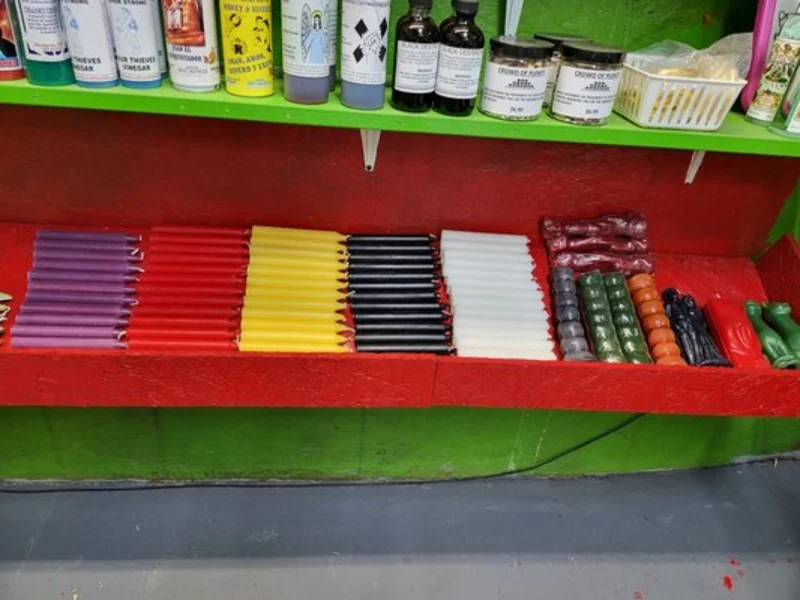
The petition worker's tools are the paper and the pen: the name written the set number of times, the paper turned ninety degrees and the command written across it without lifting the pen, the crossing that fixes the work, the folding toward or away, the dressing with oils and powders. The container's kit is the jar and its contents: the squat glass with the metal lid, the sweetener filled to the shoulder, the personal concerns and the herbs counted odd, the wax that seals. The feeding tools are the candles burned on the lid and the saucer that catches the wax, the coins paid to the ground where the overflow is buried. The freezer's kit is the symbolic container, the tongue or the pickle or the lemon, the wetting agent, the nine pins that sew it shut, the foil's mirror. The tradition's texts are its manuals: the paper-in-my-shoe book and the honey and sugar spells' volume, the suppliers' pages, the fieldwork's corpus. What the practice requires beyond the tools is the feeding: the candle kept on the lid and the jar worked over months, the maintenance the practice's actual discipline.
Elements & Concepts
The name paper. The target's name written and crossed with the working: the practice's basic instrument, worn or burned or sealed.
The crossing. The command written across the folded name without lifting the pen: the petition's fixative, its direction sending away or drawing.
The honey jar. The sweetening container fed by candle on its lid: the practice's most famous form, its jar a mid-century convenience turned tradition.
The freezer. The contained and frozen working: binding by ice, its hoodoo lineage argued and its modern form simplified, the practice's coldest instrument.
Go deeper
Immerse yourself
Learn it and visit it: courses that teach petition & container work, and the places held sacred to it.



The organizations
Institutions & businesses
Organizations whose work centers on petition & container work.