
Mantra & Mandala Practice
Mantra practice is sound as a spiritual discipline: the repetition of sacred syllables and names, counted on a string of one hundred eight beads, aloud, whispered, or in silence, the practice the tradition calls japa. Its theory reaches to the oldest stratum of Indian thought, sound itself treated as a divine reality, the sacred syllable om understood as the seed of all that is, and the mantras as its workings. The classical texts rank the degrees of recitation, the whispered hundredfold over the audible, the mental thousandfold over the whispered, and the practice's consummation is repetition become effortless, the mantra continuing of itself in the mind that no longer drives it.
The practice's forms span the traditions. The Vedic hymns are the root corpus, and among them the gayatri, the sun's own verse, carries the oldest pedigree of recitation; the Buddhist traditions carry their own formulas, the most beloved being the mantra of the jewel in the lotus, recited by millions; and the devotional schools gave the practice its congregational form, the call-and-response singing that turns japa into music. The mala, the string of beads whose number the traditions share, is the practice's constant companion, turned bead by bead as the mantra repeats, its origin older than its explanations, the count of one hundred eight carried across centuries without a settled reason.
Mandala practice is the visual counterpart: the geometric architecture of a sacred universe, deities arrayed around a center, used as the frame for meditation's visualization. In the Tibetan tradition the mandala is not looked at but entered: the practitioner generates themselves as the deity within it, the practice's highest yoga, and the initiation that grants it is literally called entering the mandala. The sand mandalas that the monasteries build before visitors, weeks of colored grains laid by funnel, carry the practice's deepest teaching in their construction and destruction both: the deities dismissed in order, the geometry dismantled, the sand carried to running water, the whole perfected form released. The yantra, the mandala's Hindu cousin, serves the same contemplation in linear geometry, its best-known form the most intricate of them all.
The modern Western encounter with mantra practice came largely through one organization: the meditation technique that standardized a private mantra, taught through its own ceremony and fee, and carried to global fame by the Beatles' year in an Indian ashram. The technique's research program built the meditation literature's early backbone, and its disputes built the literature's critical tradition; the honest summary of that half-century is that mantra meditation's benefits are real and modest, that the specific technique performs no better than its cousins, and that the organization's claims outran its findings in ways its critics documented.
The tradition's structure of access is part of the practice, and the entry holds it plainly. The great mantras of devotion are open: anyone may recite them, and the devotional schools insist on it. The tantric mantras are given: the seed syllables of the deities transmitted through initiation, the Buddhist tantras called the secret mantra vehicle precisely for their gating, practicing them unempowered a breach of the tradition's own rules. The mandala's inner practice follows the same line: the sand mandala's public demonstrations are open to all, and the deity yoga they represent is given, not taken. The practice's access label, context-dependent, is not a caution but a fact of its architecture, and knowing which door is which is part of learning the practice.
At a glance
- Category
- Energy & Spiritual Healing
- Origin of practice
- India and Tibet; the practice's sources span the Vedic and Buddhist traditions
- Access
- Context-dependentOpenness depends on the specific tradition and context. What access means
Traditions
The living lineages this practice moves within.
Tools & Materials
The mala is the practice's instrument: one hundred eight beads and the one that marks them, held in the right hand, turned bead by bead with the thumb as each repetition completes. Materials are tradition-coded, the rough-seeded strings of the Shiva devotees, the tulsi of the Vishnu devotees, the bodhi seeds of the Mahayana, and the modern market adds its own versions, wooden and stone and glass, the mala worn and carried as well as used. The chanting traditions add voice and instrument, the harmonium and drums of kirtan, the temple's bells. The mandala's tools are the sand and the funnel tubes of the Tibetan teams, and for the meditator, the printed and painted images that focus the visualization. Apps now carry the practice too, the counters and timers and recorded chants, and the meditation organizations keep their own structures, certified teachers and standard courses. The written tradition is the deepest tool: the texts of the mantras' meanings, the commentaries on the syllable om, the scholarly translations that carry the sound's theory into English.
Elements & Concepts
Japa. The repetition itself: the mantra turned on the mala or carried in the mind, in the degrees from spoken to mental. The practice's core act, and its oldest attested form.
The mala. One hundred eight beads and the guru bead that marks them: the practice's counting instrument and its constant companion. Carried, worn, and turned daily by millions.
Om. The primal syllable, the tradition's sound of sounds, recited alone and prefixed to every mantra: the practice's shortest and deepest unit.
Deity yoga. The mandala practice's highest form: the practitioner generating themselves as the deity within the visualized architecture, given through initiation. The practice's inner sanctum, described and honored rather than taught here.
Go deeper
Immerse yourself
Learn it and visit it: courses that teach mantra & mandala practice, and the places held sacred to it.
The organizations
Institutions & businesses
Organizations whose work centers on mantra & mandala practice.
 Namgyal Monastery Institute of Buddhist StudiesIthaca, New York
 IAYT (International Association of Yoga Therapists)
 Vision of TibetVision of Tibet
 Kundalini Research Institute (KRI)Santa Cruz, New Mexico (postal)
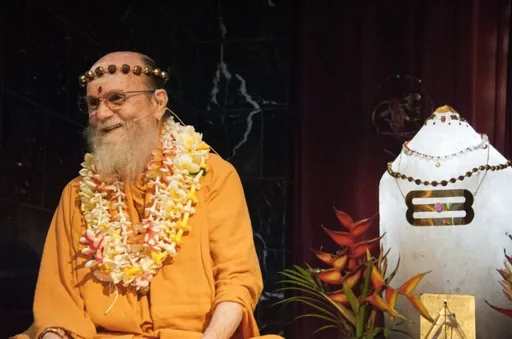 Himalayan Academy (Kauai's Hindu Monastery)Kapaa, Hawaii
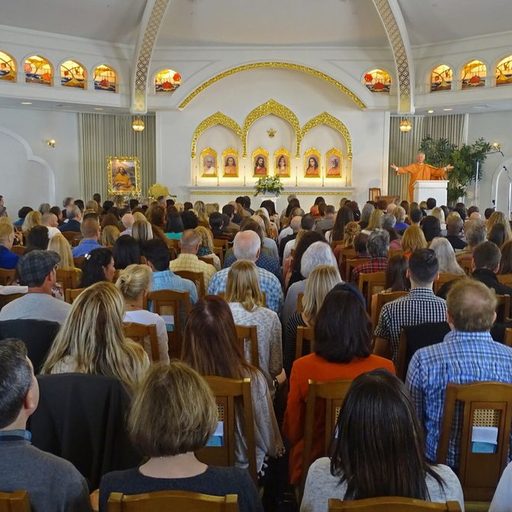 Self-Realization Fellowship Lake ShrineMain locationView allMore in mantra & mandala practice





