Visionary Painting & Art
Visionary art is the painting of visionary states: art claiming to transcend the physical world and portray a wider vision of awareness, the painter's definition the creative expression of glimpses into the sacred unconscious, and the movement's self-definition the two-thousand-one manifesto whose distinction from Surrealism is the means: where the Surrealists elevated the dream and opposed narcotics, the visionary artist uses all means at disposal to access altered states, then renders the vision in a visual language everyday sight can read.
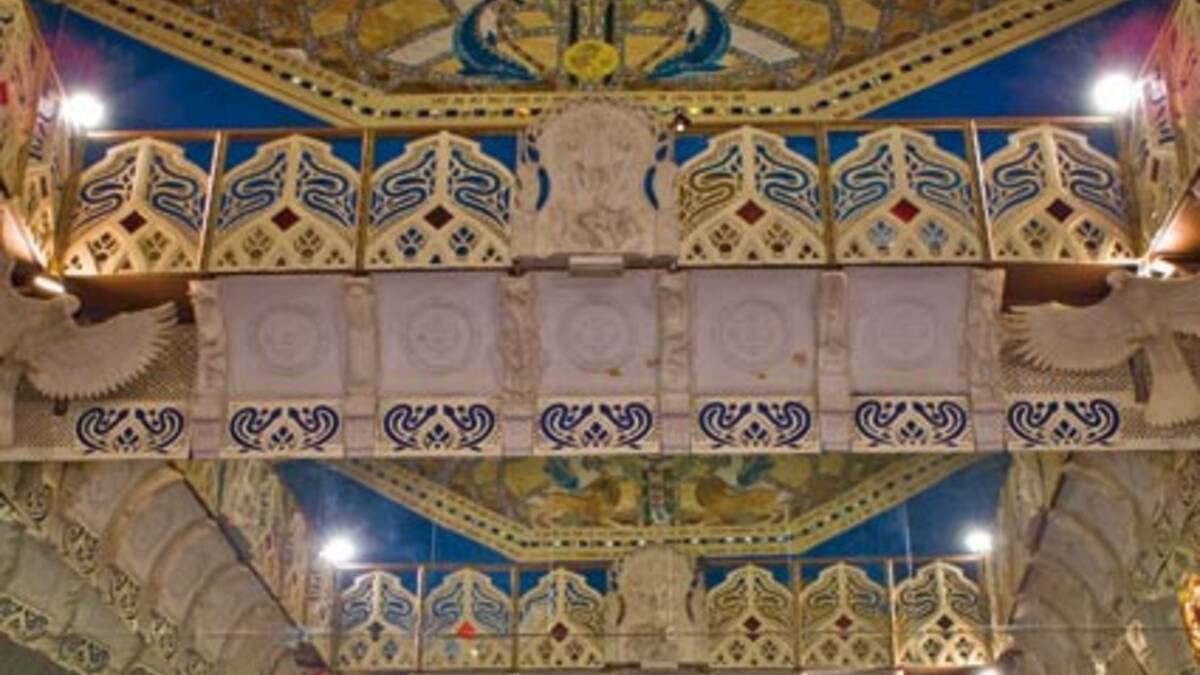
The movement's lineage is claimed through the mystics and constructed through the schools: the claimed line running from the cave painters through the visionary abbess and Bosch and Blake to the symbolists, the Swedish painter whose spirit-guided abstraction preceded Kandinsky now counted among the antecedents since her museum retrospective, and the movement's technical founder the Vienna school of fantastic realism, the 1946 group whose leading painter reconstructed the old masters' layered technique and whose students and grand-students carry the lineage through the contemporary scene. The technique is the movement's signature: the mixed method's indirect painting, the toned ground and the white egg-tempera modeling and the repeated colored oil glazes, the light penetrating the stacked translucencies to produce the interior luminosity that direct painting cannot match, the reason the technique suits light-saturated visions. The American scene's center is the chapel: the Sacred Mirrors series painted across a decade from a shared vision, the nonprofit founded in 1996, the New York chapel and then the Hudson Valley campus with its purpose-built sanctuary of visionary art, the monthly full-moon ceremonies unbroken since 2003, and the festival circuits' live painting, the desert's gift-economy art program and the Portuguese festival's curated gallery.
The ayahuasca art tradition is the entry's most instructive section, and the research corrected its popular story: the Shipibo women's designs represent the life energy of the ayahuasca plants, the healers seeing the body as covered in the patterns and using them to visualize the air around a person; they are not straightforward depictions of the drug's geometries, the neuroscientists' entoptic explanations beside the culture-specific meaning rooted in the Amazonian perspectivism, the drinker seeing from the plant's point of view; the musicologist's thesis that the patterns are musical scores was adopted by the traders and even among the Shipibo themselves, and the subsequent ethnographers question it as a recent introduction; and the curator's formulation is the one the entry keeps: the motifs are ciphers that enchant, devices for seeing through rather than images to contemplate, copying the pattern not copying the meaning. The Peruvian shaman whose paintings made the ayahuasca-vision genre international, met in poverty in 1985 and published in 1999, founded the Amazonian school of painting whose students carried the style, and the two-way flow of the market runs both directions, the Amazonian artists now feeding Western psychedelic tropes back into their own work for the lucrative Western market, the Huichol yarn painting's parallel transformation documented.
The market runs on prints and festivals: the originals' months per canvas making the giclée and the signed edition the volume business, the specialist galleries and the publisher's scene-defining anthology, the collectors' private museums, the chapel's nonprofit auctions, and the immersive-experience commercialization the newest big money. Access is open: viewing and learning and buying ungated, the technique freely taught, the lineage apprenticeships small and tuition-based, and the Indigenous art's commodification an ethics debate rather than an access barrier. The entry's counsel is the manifesto's: the vision is rendered, not asserted, and the tradition's quality lives in the shared visual language it builds, the everyday sight able to read what the altered state saw.
At a glance
- Category
- Sacred & Esoteric Arts
- Origin of practice
- The lineage claimed from the mystics and symbolists; the modern movement from 1946 Vienna
- Access
- OpenOpen to all , no initiation required. What access means
Traditions
The living lineages this practice moves within.
Tools & Materials
The visionary painter's tools are the technique and the vision: the mischtechnik's layered indirect painting, the toned ground and the tempera modeling and the colored glazes, the slow months per canvas, and the access practices, the entheogens and the fasting and the meditation and the breathwork the movement's own texts list. The print economy is the practice's commerce: the giclée and the signed edition and the metal prints, the live painting at the festivals. The ayahuasca tradition's tools belong to the Shipibo: the ceramics and textiles and bodies painted with the designs, the icaros the disputed thesis reads as scores. The tradition's texts span the lineage: the manifesto, the technique primers, the founders' books, and the scholarship of the Amazonian art. What the practice requires beyond the technique is the rendering: the vision translated into the shared language, the practice's discipline being the craft that makes the ineffable legible.
Elements & Concepts
The mischtechnik. The layered indirect painting of the Vienna lineage: tempera modeling under oil glazes, the interior luminosity the technique exists to produce.
Kené. The Shipibo geometric designs, representing the ayahuasca plants' life energy: the tradition's art, its meaning culture-specific and its popular story partly wrong.
The Sacred Mirrors. The anatomical series that framed the American movement: the chapel's founding works, and the practice's most recognized cycle.
The ciphers. The curator's term for the motifs that enchant: devices for seeing through rather than images to contemplate, the ayahuasca art's actual function.
Go deeper
Immerse yourself
Learn it and visit it: courses that teach visionary painting & art, and the places held sacred to it.