Soul Retrieval
Soul retrieval is the shamanic healing of soul loss: the doctrine holding that when a person suffers trauma, the abuse, the accident, the war, the shock, a part of the soul flees the body to survive it, a survival mechanism the tradition frames as good, the problem being that the part usually does not return on its own. The practitioner journeys into non-ordinary reality, tracks where the lost part went, negotiates or invites it home, and blows it back into the client's chest, the returned essence the session's climax. The symptoms the practice addresses are its clients' own vocabulary: the not-fully-in-the-body feeling, the chronic grief, the addictions, the never-been-the-same-since.
The tradition's roots are the world's soul dualisms: the anthropologists' documentation of the body-soul and the free-soul that leaves in dream and trance and sickness, mapped across North America and counted three to a Buryat, the classic shamanism treatise the reference. The Hmong ritual is the practice's best-documented parallel: the soul-calling ceremony with its white string bracelets and its chant, come home, this is where you belong, the divination confirming the spirit world's agreement, the sacrificial bird's feet confirming the return. The modern practice's direct line runs through the Amazon: the founder of core shamanism learned the retrieval from the Conibo of Peru in 1961 and taught it in workshops from 1982, and the woman who popularized it, a licensed therapist and the foundation's educational director, published the book that named the practice for the modern market in 1991 and built the five-day training that still defines its standard.
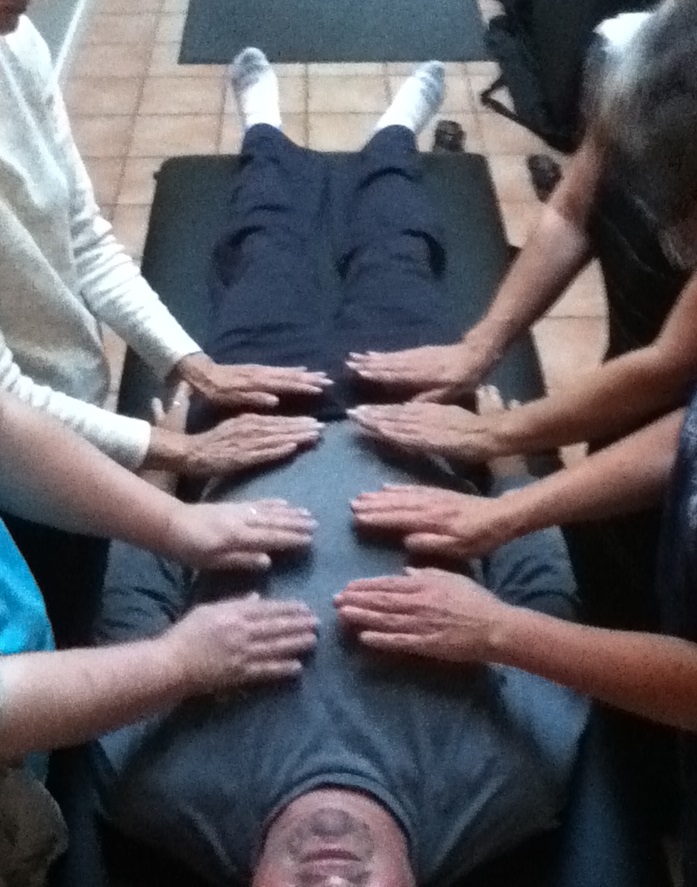
Her system is the practice's modern form, and its revisions are part of its record: the early practitioners' retelling of raw journey material re-traumatized clients, she states plainly, and it is unethical to journey-confirm whether a client was sexually abused and unethical to tell a client a damaged part was returned, her own later framing turning toward the gifts returned rather than the damage repaired. The session's current shape reflects that arc: the client lying receptive while the practitioner journeys, the absorption ritual afterward, the client's chosen metaphor for taking the returned essence in, the twenty minutes of rattle and song before any story is told, and the story told only in terms of gifts and strengths. The aftercare is the practice's own emphasis: the retrieval the beginning of the rebuilding, not its end, the integration sessions scheduled weeks later, the practice capped at one per season of a year.
The psychology parallel is explicit in the tradition's own words: dissociation is what psychology calls it, she says, the difference being that psychology does not discuss what dissociates or where it goes, and the small studies of the practice's application to trauma-related dissociation, preliminary and self-interested, sit beside the recovered-memory literature's cautions, the practice's material being precisely the kind the memory science warns about. The critiques carry both registers: the appropriation scholarship's charge against core shamanism generally, the commodified copy of a copy, and the unregulated field's own ethics codes, the society's statement that no governing body exists, the foundation's requirement of express consent before any work, healing without it straying into sorcery by the tradition's own definition.
The market prices the session at two to four hundred dollars, the trainings in the thousands, no licensure anywhere. Access is open but taught. The entry's counsel is the founder's own, the practice's most instructive lesson: the story told matters, and the difference between the damaged part and the gift returned is the difference between the harm and the healing.
At a glance
- Category
- Shamanic Practice
- Origin of practice
- The soul-loss doctrine widespread in indigenous America and Siberia; the modern practice systematized in California, 1990
- Access
- OpenOpen to all , no initiation required. What access means
Traditions
The living lineages this practice moves within.
Tools & Materials
The soul retrieval practitioner's tools are the drum and the journey: the altered state entered on the client's behalf, the tracking of the lost part, the negotiation for its return, and the blowing that delivers it. The integration kit is the modern system's addition: the rattle and the bowls and the bells played through the twenty minutes of absorption, the client's chosen metaphor, the story told in gifts. The aftercare tools are the integration session and the lifestyle rebuilding the practice prescribes. The tradition's texts span its sources: the anthropological literature of soul dualism, the Hmong ceremony's documentation, the founder's fieldwork accounts, and the popularizer's books and trainings. The Hmong ritual's own instruments, the strings and the chant and the divining horns and the sacrificial bird, belong to their tradition, the parallel documented rather than borrowed. What the practice requires beyond the tools is the ethics the founder wrote: the consent obtained, the story shaped to gifts, the confirmation of abuse never journeyed for, and the limits of one retrieval per season honored.
Elements & Concepts
Soul loss. The doctrine that trauma scatters the soul and that a part flees to survive: the practice's premise, framed as survival mechanism rather than pathology.
The tracking. The journey to non-ordinary reality in search of the lost part: the practitioner's core work, performed on the client's behalf.
The blowing. The return of the retrieved essence into the client's chest: the session's climax, the tradition's oldest gesture.
The gifts framing. The modern system's rule for telling the story: strengths returned, never damage repaired. The practice's hardest-won lesson, learned from the early harm.
The organizations
Institutions & businesses
Organizations whose work centers on soul retrieval.