Oracle Card Reading
Oracle cards are divination without the rulebook. A tarot deck arrives with seventy-eight fixed meanings and centuries of literature; an oracle deck arrives with its own theme, its own structure or none, and its own instruction booklet, and the reader meets it as an individual work rather than a shared language. That openness is the practice's defining trait and the reason for its enormous modern spread: any artist can make an oracle deck, any reader can read one, and the deck's meaning lives in the dialogue between its images and the person drawing them.
The form has old relatives and a recent flowering. Purpose-built fortune decks existed in the cartomancy centuries, the Lenormand family among them, and illustrated oracle decks have circulated since the nineteenth century; but the modern oracle boom belongs to the last several decades, when publishers and independent artists produced decks for every theme imaginable, angels, animals, goddesses, seasons, crystals, ancestors, affirmations, and the practice grew into a large and varied culture of its own. Some decks carry structured systems, numbered cards and defined suits; many are free-form, each card a scene with a resonance rather than a definition.
A reading with oracle cards leans on the reader's own perception in a way tarot's structure does not require. The question is asked, cards are drawn, and the images are read for what they stir: the scene's mood, its figures, its direction, the intuition that connects the picture to the life it's being drawn about. Many readers work with a single beloved deck for years and know its cards like old friends; many combine decks, drawing an oracle card alongside a tarot spread to set the tone or close the reading; and the practice's honesty about itself, that the cards mirror the reader as much as they inform, is part of its appeal. Where tarot readers debate systems, oracle readers curate relationships, and the practice's culture is correspondingly personal.
The commercial landscape is vast and uneven, thousands of decks from the sublime to the cynical, and the practice's own advice to newcomers is consistent: choose a deck whose images move you, read its companion book as a starting point rather than a law, and let the meanings you discover with the deck over years outweigh the meanings printed on day one. Used that way, the practice does what its oldest relatives did: gives the inner eye a surface to see on.
At a glance
- Category
- Divination
- Origin of practice
- Modern era; oracle decks multiplied from the twentieth century onward, with antecedents in eighteenth and nineteenth century fortune decks
- Access
- OpenOpen to all , no initiation required. What access means
Traditions
The living lineages this practice moves within.
Tools & Materials
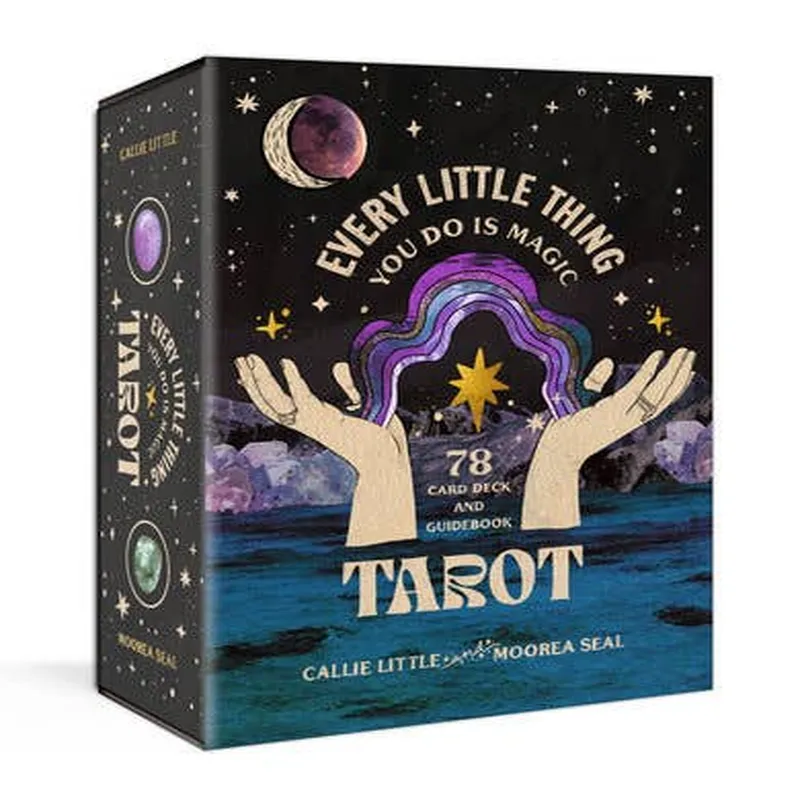
The deck is the instrument, and its variety is the field's texture: boxed kits with companion books, artist decks in small editions, self-published works, and the mass-market lines that made oracle cards a fixture of bookshops. Decks range from structured systems to single-card-a-day sets, and readers typically own several, keeping one or two in active rotation. A cloth or box for the deck, a journal for draws and their unfoldings, and the reading space's usual quiet complete the kit. The tradition's one firm piece of advice concerns selection rather than use: the deck should speak to its reader, because the practice runs on the reader's response to the images, and a deck that leaves the reader cold leaves the reading flat, whatever its system or its beauty.
Elements & Concepts
The draw. Cards pulled for a question, a day, or a situation, in any count the reader's practice settles on. The oracle's signature is the single card, drawn in the morning as the day's lens.
Open structure. The deck's freedom from a fixed canon: no suits required, no reversals, no shared meanings across decks. Each deck is its own system, and the reader learns it as such.
Image reading. The skill of meeting an image without a dictionary: what the scene shows, how it sits, what it stirs. The practice's central act, and the reason its readers value their own perception above the companion book.
Deck relationship. The reader's bond with a particular deck, built through use: the meanings discovered together over years, the deck that answers in its own voice. Oracle culture's most distinctive element, and the one its practitioners mention first.
The organizations
Institutions & businesses
Organizations whose work centers on oracle card reading.