Lithomancy
Lithomancy casts stones the way bones are thrown: a set of stones, gathered or chosen or marked, is held in the hands with the question, then cast into a circle on a cloth or board, and the reading lives in the fall, which stones land together, which point outward, which land at the center and which drift to the edge. The set is usually small, ten to sixteen pieces, each stone carrying a meaning by the planet or power it stands for, and the reader reads relationships rather than fixed positions, a practice of pattern rather than grid.
The tradition's paper trail is honest about being light. The word reaches back to a handful of ancient anecdotes: the ninth-century patriarch Photius preserved a story of a physician healing with an oracular stone, and the old encyclopedists retold legends of voiced stones that prophesied, the kind of tale that attaches to sacred stones across cultures. Archaeology offers stronger ground than the anecdotes: Bronze Age Armenia has yielded polished stones in ritual installations that excavators read as divination equipment. The modern printed systems, all of them recent, built the working practice on that old name: a sixteen-stone method reading ten planetary stones against six personal ones within a circled cord, a thirteen-stone set of planets and powers drawn from the bag, and composite systems that progress from two-stone draws to full casts on marked surfaces. The planet stones borrow astrology's meanings, and readers who also work astrology find the two practices speak the same language.
The practice's most documented living relative is not European at all: in Tibetan Bon tradition, pebble divination has its own deep methodology, a living lineage of casting stones that scholars have studied in its own right, and it stands as the strongest evidence that stone casting, wherever it arises, tends toward the same grammar: a bounded field, a handful of meaningful pieces, and a fall that answers.
The set itself is the practice's personal core. Stones are gathered from riverbeds and beaches, chosen by feel or by kind, painted or engraved with symbols, and dedicated to the work; some traditions hold that the gathering itself matters, stones collected in one season carrying that season's quality. The cast is read in layers: the overall pattern first, a tight cluster reading differently from a scatter, then individual stones, then the geometry between them, a stone pointing away from the central life stone reading as departure, two stones touching as connection. Timing reads in the distance from the center, near for now, far for later, and the whole reading tends to span a season rather than a decade.
Lithomancy sits in the library between its loud neighbors. It has none of rune casting's historical weight or tarot's commercial reach, and its modern systems are young enough that practitioners know they are building; but the practice of casting meaningful stones is old wherever it appears, and the pleasure of the practice, a pocket full of stones chosen one by one over years, is exactly what its practitioners say keeps them at it.
At a glance
- Category
- Divination
- Origin of practice
- Anecdotes from late antiquity; modern systems built in the twenty-first century; Tibetan Bon pebble casting a living parallel lineage
- Access
- OpenOpen to all , no initiation required. What access means
Traditions
The living lineages this practice moves within.
Tools & Materials
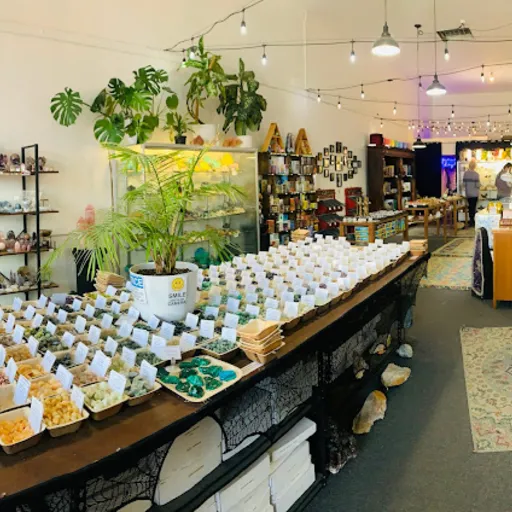
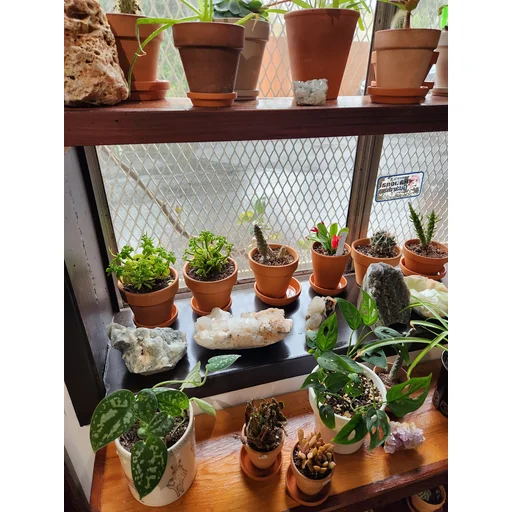
The set is the instrument, ten to sixteen stones of similar size, and its assembly is the craft: stones gathered from nature, river rocks chosen by touch, or gemstones selected for the planet they will represent, each dedicated with intention before it joins. Some systems mark the stones, painted astrological glyphs or engraved symbols; others read raw stone by color and kind. The casting surface is a circle, cord, lace, or drawn board, marked or plain, that bounds the fall and gives position its meaning. A bag keeps the set, and the set travels well, the most portable of all the casting arts. Modern printed systems supply the meanings and the layouts, and readers adapt them as their sets and instincts settle.
Elements & Concepts
The cast. Holding the set with the question and releasing it into the circle, the stones' own weight and shape deciding their fall. The cast is the practice's randomizer and its ritual in one.
Pattern reading. The first layer of any reading: the overall shape of the fall, clusters, scatters, lines, and what the whole arrangement says before any single stone is interpreted.
The pointers. Stones that land pointing, an edge or a marked face oriented toward another stone or outward from the circle. Direction carries the reading's motion, and pointer-reading is the craft's most distinctive skill.
Planetary attribution. The dominant meaning system: stones standing for the Sun, Moon, and planets, read with astrology's meanings. The system borrows its depth from astrology and rewards readers who know both.
The organizations
Institutions & businesses
Organizations whose work centers on lithomancy.