Drum Circle & Sacred Rhythm
The drum circle is community rhythm-making: the gathering where anyone may play, the music co-created by listening rather than conducted, its values equality and inclusion and freedom of expression, its sizes ranging from a handful of friends to the thousands on the California beaches. The practice's formal cousin, the facilitated group drumming, is distinct though often conflated: the facilitator owns the space and conducts the group's energy through cues and games, a profession built by the drummer whose village music circles trained thousands of facilitators and whose instrument manufacturer made the festival drum a product line. The pagan fire circle is the practice's ceremonial form: the drummers on one side of the bonfire, the dancers circling, the drumming and chant running to dawn, treated by its communities as a magical working, and the scholarship of the festival culture reads its rhythms as alchemical, the first festival's spontaneous jam and bonfire founding the scene in 1981.
The modern form's history is the counterculture's: the Nigerian drummer whose 1959 record turned generations onto the djembe, whose Harlem drum center of the sixties and whose simple syllable method taught the rhythms, and whose festival performances crowned the fire circle scene, the catalyst rather than the inventor, as the scholars of the form note, the drum circle a North American invention built on the partial appropriation and simplification of African-based drumming, the critique the entry carries as the practice's documented genealogy. The djembe itself is Mande, indigenous to Guinea and Mali, its spread to the West through the ballets and the teachers, its traditional rhythms and their contexts the heritage the circle borrows and transforms.
The evidence around the practice is real but small: the early study of group drumming's effects on stress hormones and immune markers, single trial, protocol designed by its authors; the six-week drumming program for mental health service users that reduced anxiety and depression and modulated inflammatory markers; the pilot trials in older adults and dementia care; the honest summary being short-term mood and stress effects supported in small studies, large clinical evidence absent, and the instrument manufacturer itself stating that its facilitation training does not certify music therapy. The sacred rhythm traditions surround the practice with deeper roots: the frame drum's first named player a priestess of Ur four millennia back, the feminist history's thesis attributed rather than asserted, the Native hand-drum's powwow and medicine-wheel drumming belonging to ceremonies rather than circles, the appropriation debates the practice's documented context, the Native journalists' reporting on ceremony sold by non-Native healers part of the record.
The market sells the practice through facilitation: the training playshops and the health-rhythms certificate, the drums and the festival programming, the meetup groups and the retreats. Access is open by definition: the free-form circle public and free, the paid tier the facilitation training rather than any gate on practice. The entry's counsel is the form's own: the circle's magic is the listening, and the facilitator's skill is drawing music from people who did not know they had it, the practice's promise kept by its inclusion rather than its expertise.
At a glance
- Category
- Shamanic Practice
- Origin of practice
- The modern form from the 1960s counterculture; the fire circle a fixture of the pagan festival scene from 1981
- Access
- OpenOpen to all , no initiation required. What access means
Traditions
The living lineages this practice moves within.
Tools & Materials
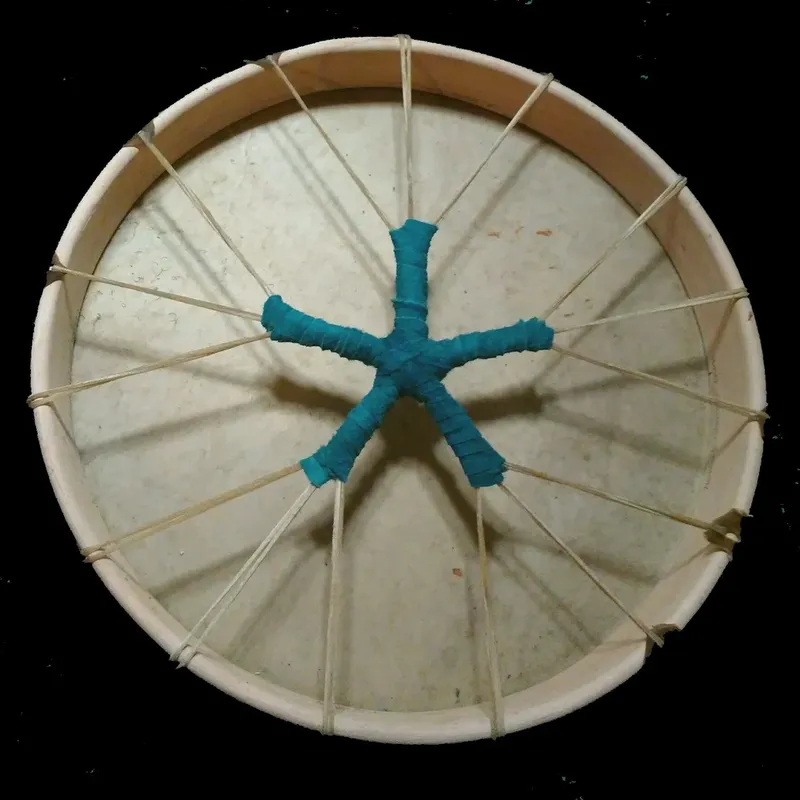
The drum circle's tools are the drums and the hands: the djembes and doumbeks and frame drums of the circle's mixed kit, the festival drums manufactured for group use, the shakers and bells that fill the rhythm's texture. The facilitator adds the conducting toolkit: the verbal and nonverbal cues, the rhythm games, the arrangement of instruments that gives newcomers something playable. The fire circle's setting is its own instrument: the bonfire's heat and light, the dancers' counterpoint, the night's length. The tradition's texts are thin and recent: the facilitator's manuals, the drummer's teaching method, the feminist history of the frame drum, the scholarly chapters on fire circle culture. The health research supplies the practice's evidence base, small trials in mood and immunity. What the practice requires beyond the instruments is nothing: the free-form circle's entry fee is presence, and the tradition's deepest tool is the listening that turns separate players into one rhythm.
Elements & Concepts
The circle. The gathering itself, leaderless and inclusive: the practice's defining form, its magic the co-created rhythm.
The fire. The bonfire that anchors the ceremonial form: the dancers' center and the drummers' stage, the night's axis from dusk to dawn.
The call and response. The facilitator's cues and the circle's answers: the conducted form's dialogue, and the games that teach it.
The groove. The shared rhythm that emerges when the listening works: the circle's product, felt rather than written, and the practice's promise.
Go deeper
Immerse yourself
Learn it and visit it: courses that teach drum circle & sacred rhythm, and the places held sacred to it.
The organizations
Institutions & businesses
Organizations whose work centers on drum circle & sacred rhythm.