
Clairvoyance
Clairvoyance, clear seeing, names the claimed perception of what the physical eyes cannot see: images, scenes, and symbols arriving in the mind's eye. The vocabulary is younger than the experience it names. The word entered English in 1837, borrowed from French where it had meant only clear-sightedness, and it grew up in the mesmeric movement's experiments: the trance subjects of the 1840s and 1850s, seated in their somnambulic states, were the first people the new science of the mind described as clairvoyant. The Spiritualist movement that followed carried the term into its churches, where seeing spirits became the practice's central claim, and the psychical researchers of the same decades tested the seers with cards sealed in envelopes. The other clair terms followed on the same pattern, clairaudience for the clear hearing of voices and sounds, and the tidy four-clair or six-clair system familiar today is a later systematization still, a modern practice organizing itself.
In the modern vocabulary, clairvoyance is one sense in a family of five, the clairs extending each physical sense into its claimed intuitive counterpart: seeing, hearing, feeling, knowing, with smelling and tasting in some schools. What a clairvoyant reports is imagery with meaning, and practitioners are specific about its texture: the seeing happens internally, as mental images rather than objects before the eyes, and the images tend to arrive as metaphor rather than literal report, a client's overwhelm appearing as a figure carrying a heavy bundle, instability in a life appearing as shifting continental plates. The reader's skill lies in the translation, receiving the image plainly and then rendering what it says about the person or situation it concerns.
The practice sits inside a larger structure it shares with mediumship, and the community draws the line with care: all mediums are psychic, the maxim runs, but not all psychics are mediums. The psychic reads the living sitter, their energy and situation, past, present, and possibility; the medium contacts the departed, and is held to a standard the practice calls evidential, names and dates and memories specific enough that the sitter can verify them, the tradition's own falsification culture, which practitioners describe as the difference between a real message and a vague comfort. The clair senses serve both roles as their instruments: the same clear seeing that reads a sitter's situation is, in the medium's work, the faculty by which spirits are perceived, internally as images or, in the stronger claims, as presences seen as though physically present.
The training culture is the Spiritualist church's inheritance. Development circles, the small weekly groups where students sit, practice, and compare notes, descend from the home circles of the movement's first generations, and their structure remains the tradition's classroom: grounding, teaching, paired practice, and the sharing back that teaches students where their impressions land true and where they drift. The Spiritualist colleges of Britain run residential courses in the same lineage, and the modern online schools teach the clairs to audiences the churches never reached.
The contested ground is real and belongs in the record. The controlled testing of clairvoyant claims spans more than a century, from the card-guessing experiments of the early psychical researchers through the card tests that failed under tighter conditions, to the ganzfeld experiments whose meta-analyses divide the field, a small statistical effect contested between the parapsychologists who defend it and the mainstream that finds it unconfirmed; and the American government's remote viewing program of the Cold War decades ended with its own evaluators reporting that no intelligence operation was ever guided by its results. Practitioners answer that the laboratory cannot capture how the ability works, that it does not perform on command, and the disagreement between the two accounts, the tradition's lived experience and the experiment's null results, remains where it has always been, unresolved and visible.
Access has never been the issue. The clair senses are taught as latent capacities anyone can develop, the first exercises as ordinary as noticing the mind's images at the edge of sleep, and the practice's door opens as wide as its subject: everyone dreams, everyone senses, everyone wonders.
At a glance
- Category
- Divination
- Origin of practice
- Terminology from the Mesmerist and Spiritualist eras, 1837 onward; the experience claimed in every era
- Access
- OpenOpen to all , no initiation required. What access means
Traditions
The living lineages this practice moves within.
Tools & Materials
Clairvoyance works without instruments, and the practice's tools are the conditions that support the sight: the dimmed light and quieted room, the meditation that settles the mind's surface so images can rise, the journal in which impressions are recorded before interpretation edits them. Where tools appear, they serve as focusing aids rather than sources: the crystal ball and the black mirror of the scrying tradition are understood in this school as surfaces that gather the same faculty, and cards and symbols as vocabularies that give the images somewhere to attach. Development circles add the group's own instruments, the paired readings and the objects of psychometry practice, and the serious student's kit is ultimately the record: journals of impressions and their verifications, the practice's way of learning its own accuracy over years.
Elements & Concepts
The mind's eye. The interior screen where the clairvoyant's images appear, distinguished carefully from physical sight. Learning to notice, trust, and hold the images without forcing them is the practice's foundational skill.
Symbolic translation. The images arrive as metaphor, and the reading happens in the translation: the bundle on the back, the shifting ground, the weathervane. The skill is receiving the image plainly and rendering its meaning without either embellishing or dismissing it.
The objective and subjective modes. The tradition's distinction between seeing a presence as though it stood physically present and seeing it as a picture in the mind. Both are claimed, and practitioners describe their own mode as a fixed trait of their sight.
Verification. The habit the evidential schools insist on: recording impressions with their dates, checking them against what can be known, and learning from the misses as much as the hits. The practice's own answer to the problem every intuitive discipline faces.
The organizations
Institutions & businesses
Organizations whose work centers on clairvoyance.
 Rhine Research CenterDurham, North Carolina
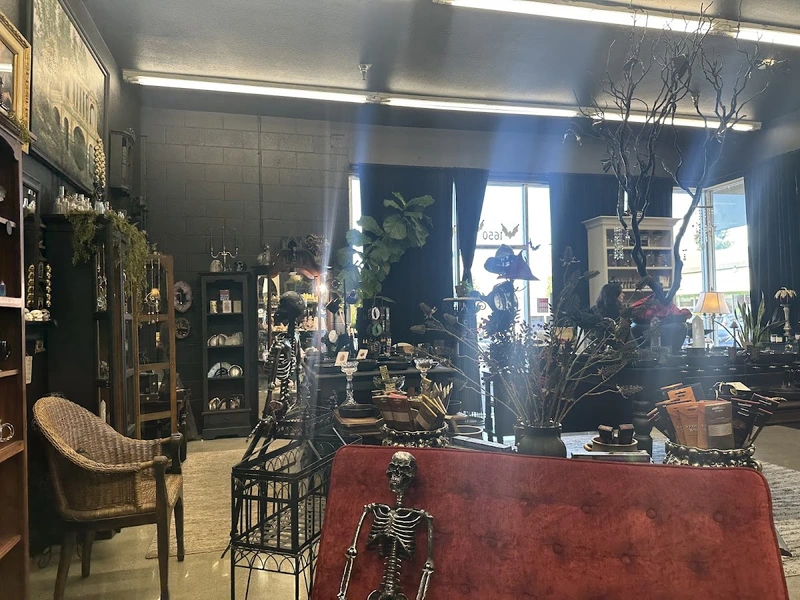 Crystal NookCrystal Nook, Ashland Shopping Center
 Spiritualists' National Union (SNU)Stansted Hall, Essex
 Arthur Findlay CollegeStansted Hall, Essex
 Parapsychological AssociationColumbus, Ohio (postal)
 Koestler Parapsychology Unit, University of EdinburghEdinburgh, ScotlandView allMore in clairvoyance





