
By Bailey Romatoski ·
Ceromancy is divination with melted wax. Wax is poured, usually into water, and the shape it hardens into is read like a message: a ring for a promise, a bird for news, a rough broken edge for something unresolved. It's simple enough to do at a kitchen table and old enough that your great-great-grandparents may have done a version of it on New Year's Eve.
What is ceromancy, exactly?
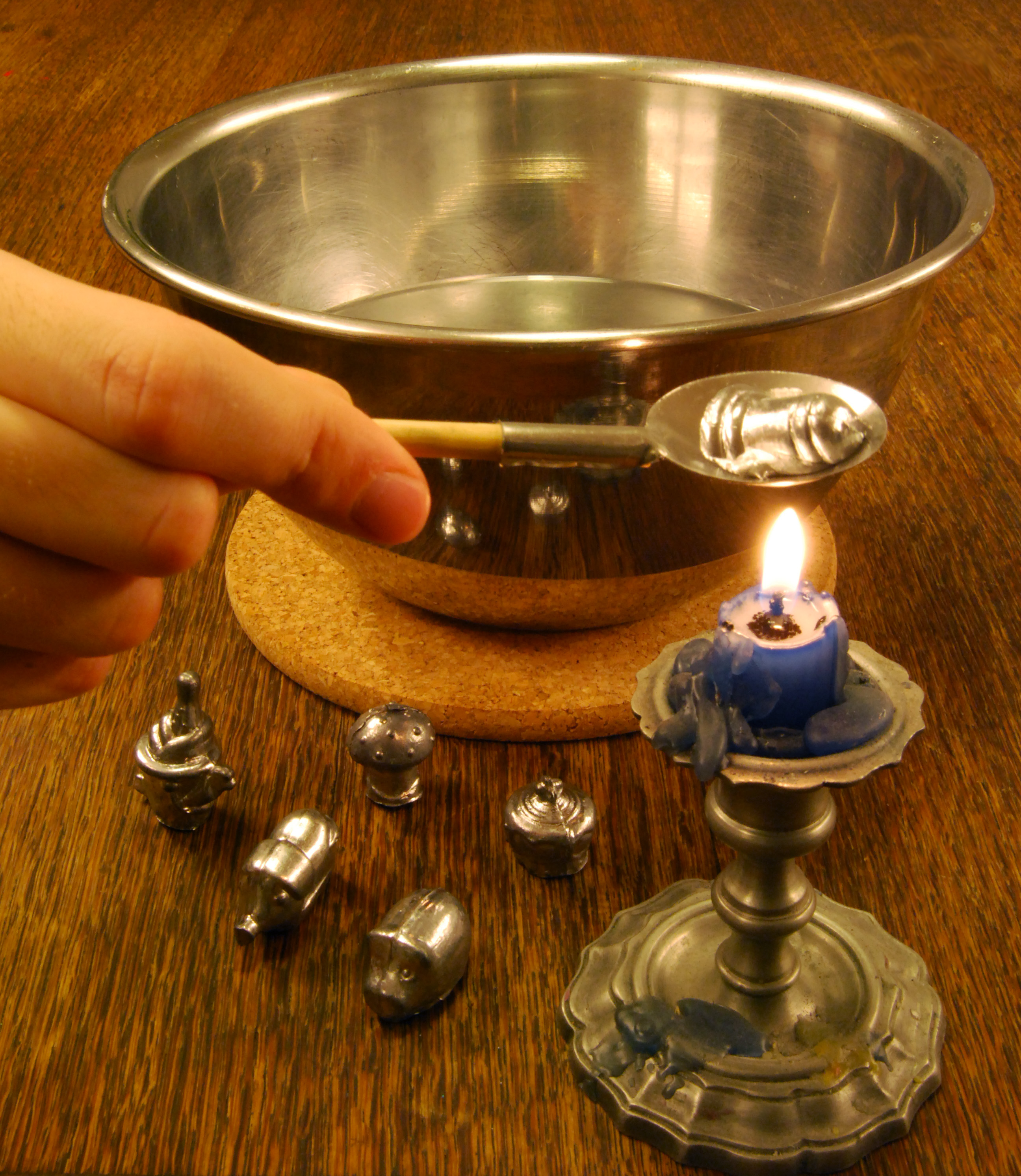
The name comes from the Greek word for wax, keros. In practice, ceromancy covers any divination where molten wax becomes the oracle: dripped into cold water, poured onto a flat surface, or read from the shapes wax makes as it burns. The most common form is the pour. You melt wax, ask your question, pour it into a bowl of water, and let it set. The hardened shape, and sometimes the shadows it throws, is what the reader interprets.
It belongs to a bigger family of melt-and-pour divination. The best known cousin is molybdomancy, where molten lead or tin gets poured into water instead of wax, a tradition still alive across Turkey, the Balkans, Germany, Austria, Switzerland, and Finland. In Finland the New Year's tin pour is so mainstream that shops sell ingots cast in a horseshoe for it every December. Ceromancy uses the same logic with a friendlier material: no fumes, no toxicity, just wax.
Where does ceromancy come from?
Melt-and-pour divination is old and widespread. Pouring molten metal into water to read the future is documented across Europe and Anatolia for centuries, and in Turkey the practice, kurşun dökme, is still used today, often for easing worry or lifting the evil eye. Jewish folk practice includes a version too, Bley-gisn, where a psalm or incantation is said before the pour. Wax came into the family naturally: it melts at a low temperature, it's cheap, and candles were already part of religious and magical life everywhere.
Caromancy, dripping wax into water, shows up in European records as a substitute or sibling to the metal pour, and folk magic traditions on both sides of the Atlantic kept wax reading alive in hearth and candle work. Like most divination of this kind, it lived close to home. This was practice done by and for ordinary households, not just temples and courts, which is part of why it never really died.
One honest note: wax is a household material, so ceromancy has less of a single lineage than traditions like Ifá or bone throwing. What you inherit when you learn it is a method and an interpretive vocabulary passed from reader to reader. The readers who do it well can usually name where their method came from.
How does a reading work?
A typical wax reading runs like this. The reader sets the mood, often with a candle (which doubles as the wax source) and a quiet minute. You settle on a question. The wax melts in a spoon or a small pot, then gets poured into a bowl of cold water, sometimes through a ring or key for extra meaning, or straight onto a white surface depending on the reader's method.
The shape hardens in seconds. Then the interpretation starts, and this is where a reader earns their keep. Some shapes are classic: a circle for completion, a ship for a journey, a key for an opening. Most pours produce something in between, and the reader turns the form slowly, reads it from several angles, and sometimes holds it up to candlelight to read the shadows it casts. Details matter: bubbles can suggest money or agitation, a smooth sweep suggests an easy road. Many readers do more than one pour, the second one digging into whatever the first one raised. Sessions commonly run 30 to 45 minutes.
Ceromancy vs tarot: what's the difference?
Tarot is a fixed symbol system. The card you pull means what it means, and the depth comes from combinations and positions. Ceromancy is the opposite: the symbol is created fresh in front of you, every time. There's no deck to learn, which makes it feel less like a reading and more like watching a message take form.
Tarot also spreads a whole question out across a story, past to future. A wax pour tends to be more concentrated: one question, one shape, one answer to sit with. If you like rich structure, tarot may click first. If you like the element of the unexpected, of a form nobody has ever seen before landing in your bowl, wax is hard to beat. Plenty of readers use both, tarot for the map and wax for the moment.
How do I find a ceromancy reader?
Wax readers often practice inside broader folk magic or candle work, so look for readers who describe their whole practice honestly: what they pour wax for, what else they do, where their method came from. Practitioner directories and metaphysical shops are good starting points, and readers who pour at fairs and markets will usually do sessions by appointment too.
A good sign is a reader who explains the method before the first pour, including what they'll need from you and what the session costs. Be careful with anyone who turns every pour into bad news, tells you a shape means you're cursed, or hooks fear to a big ticket package. Those patterns show up around every kind of divination and they're always a reason to keep looking.
Questions to ask before you book
Ask three things. First: "Where does your wax reading method come from, and how long have you been doing it?" Second: "What happens in a session with you?" Some readers pour once and read deep; others pour several times. You want to know which. Third: "What do you charge, and what do you not do?" Wax readers who also do candle work or spell work should be upfront about what a booking includes. A reader who answers these plainly is worth your time.
The bottom line
Ceromancy is one of the friendliest doors into esoteric practice: a candle, a bowl of water, and a question. Its power is in the freshness of each pour, a symbol made new for you every time. Come with something real to ask, choose a reader who can explain their method, and expect a shape worth studying, not a sentence written in stone.