
By Bailey Romatoski ·
Bibliomancy is divination by book. You hold a question, open a book at random, and read the passage your finger or eye lands on as the answer. It might be the oldest form of divination that requires no tools at all beyond something to read, and it's one of the few practices still going strong in living religious traditions around the world.
What is bibliomancy, exactly?
The mechanics are beautifully simple. Take a sacred or meaningful book, ask your question, open it blind, and read where it falls. Some readers stab the page with a finger, some read the first line their eye catches, some count down a set number of lines. The passage is the oracle, and the reader's skill is in the interpretation: what does this verse, this line, this half-remembered poem say about your question?
The book matters. Traditionally it's a sacred text: the Bible, the Quran, the Hebrew scriptures. But plenty of practitioners use any book that carries weight for them, from Rumi to a beloved novel. What all versions share is the idea that the right words arrive when you need them, and that randomness in the moment is not randomness at all.
Where does bibliomancy come from?
The practice is ancient and remarkably global. In the ancient world, Romans consulted the works of Virgil this way: you'd open the Aeneid at random and read the line as an omen, a practice called the sortes Vergilianae. It was taken seriously enough that emperors used it for state decisions. Christians adopted the same method with scripture, and the sortes Sanctorum, opening the Bible for guidance, became so widespread that early church councils had to weigh in on when it was appropriate.
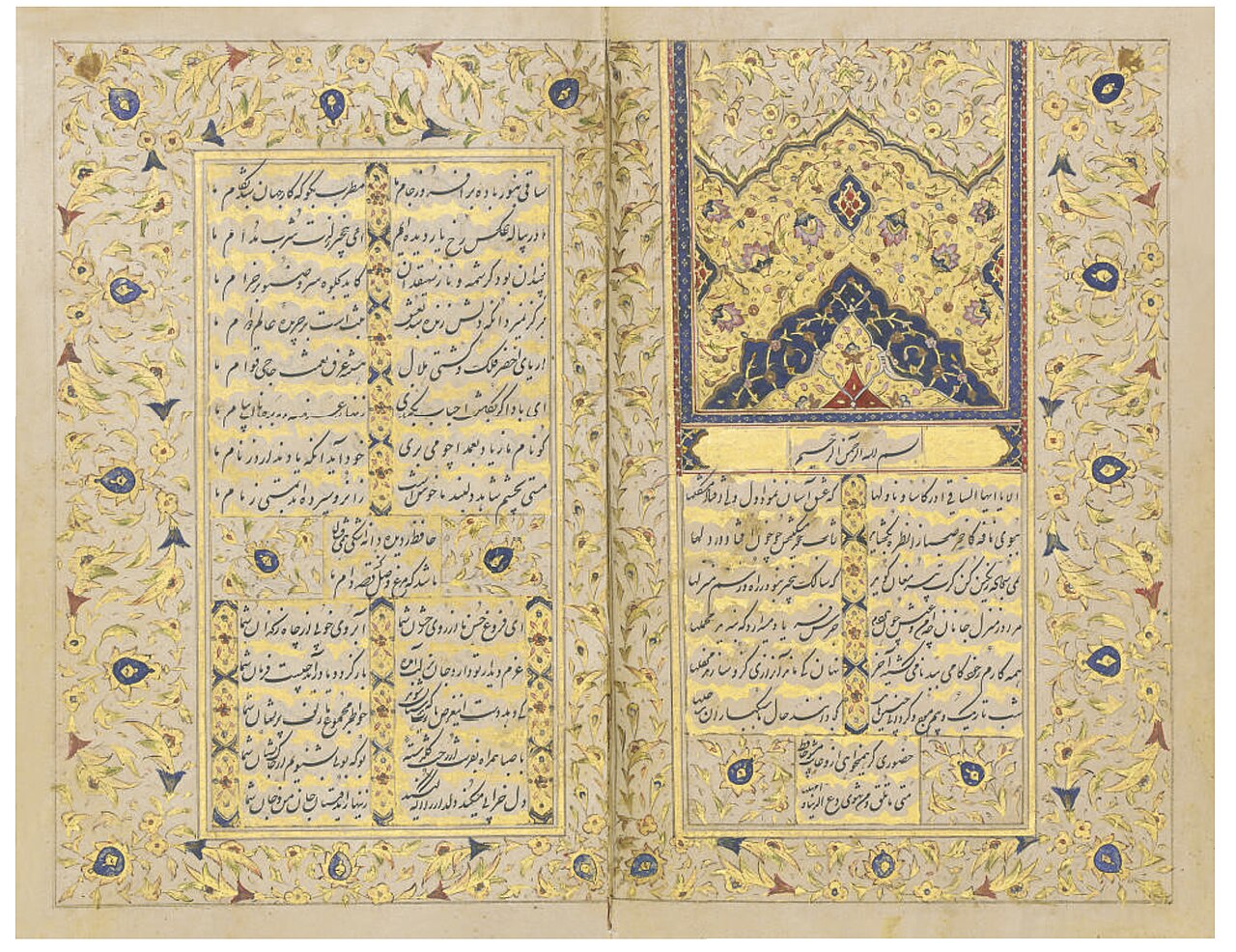
The Persian tradition is still vivid today. Fal-e Hafez is the practice of opening the Divan of Hafez, the 14th century poet of Shiraz, at random to read your fortune, and families have done it for centuries, especially on Shab-e Yalda, the winter solstice night. The poems are read as direct answers to the question you held. It is one of the most widely practiced forms of divination in the world right now, done in living rooms as much as by professional readers.
The I Ching in China, though it uses coins or yarrow stalks to generate the answer, is also a book you open: the throw points you to a passage, and the text is the oracle. And the Hebrew tradition has its own long history of opening scripture for guidance, which is part of the same family tree. In other words, wherever books became sacred, people started opening them at random. Bibliomancy may be the most universal divination practice there is.
How does a reading work?
A bibliomancy session depends heavily on the tradition the reader works in. A Persian fal reader will ask your question, open the Divan of Hafez, and read the ghazal that appears, then unpack it line by line and connect it to your situation. A reader working in a Christian or Jewish frame may do the same with scripture, sitting with you while the passage gets read aloud and discussed.
Most sessions share a shape. You state your question clearly, and the reader may invite you to hold the book or breathe on it first, connecting the query to the text. The book falls open where it falls open. Then the interpretation: the passage is read in full, key phrases are pulled out, and the reader applies them to your question. Ambiguity gets worked through in conversation, which is the real value of a session, since a line that reads as a warning in one context reads as permission in another. Sessions commonly run 30 to 60 minutes, and many readers offer follow-ups when the situation changes.
Bibliomancy vs tarot: what's the difference?
Tarot uses cards with fixed meanings and named positions; bibliomancy uses a text you can read in full. That changes the texture of the reading completely. A tarot card gives you a symbol to interpret. A bibliomancy passage gives you actual sentences, in an actual language, with grammar and context, and the interpretation lives in how those sentences apply to your life.
Tarot also offers a spread: past, present, future, obstacles. Bibliomancy tends to be more concentrated, one passage, one answer, and often a sterner or more poetic one. If you like systems and structure, tarot is the easier entry. If you find guidance more convincing when it arrives as words rather than symbols, bibliomancy has a directness nothing else quite matches. Many readers keep both on the table, and plenty of tarot readers quote books when a card needs a voice.
How do I find a bibliomancy reader?
Start with the tradition. If you want a fal-e Hafez reading, look for Persian practitioners in your community or online, since the practice is common in Iranian and Persian-speaking communities. If you want scripture-based work, look for readers who are honest about their religious background and how they were taught. Some bibliomancy readers work within their faith communities, and others offer secular readings with poetry or literature.
A good reader will tell you which book they use and why, and they'll treat the text with the respect it carries for them. That matters: this is a practice rooted in sacred texts for most of its history, so a reader who handles your tradition of choice carelessly is a bad sign. As with every practice, watch for fear-selling. A passage that reads as a hard word deserves conversation, not a panic pitch with a package price attached.
Questions to ask before you book
Three questions cover it. First: "Which book do you read from, and what does that book mean in your practice?" Second: "What happens in a session with you?" You want to know whether you'll hear the full passage read and discussed or just a summary. Third: "What do you charge, and what do you not do?" Honest readers are glad to say where their competence ends. If a reader bristles at any of these, that's information.
The bottom line
Bibliomancy is the people's divination: a book, a question, and the willingness to believe the right words find you. It has survived two thousand years because it works on a human level, a line of poetry or scripture landing at exactly the right moment. Come with a real question, choose a reader who honors their text, and expect to be read a passage you'll remember.